Retatrutide vs. Tirzepatide: A Buyer's Head-to-Head Decision Framework
Date: 2026-09-15 Categories: Latest News Hits: 742
Retatrutide vs. Tirzepatide: A Buyer's Head-to-Head Decision Framework
The short answer: Retatrutide and Tirzepatide are not competing answers to the same question. They are two points on the same sourcing curve. Tirzepatide is a documented, procurement-ready line with published specifications; Retatrutide is a next-generation molecule still in Phase 3 investigation. For an evaluation-stage procurement team, the deciding question is not which molecule is better, but which one fits your market-entry timeline and your volume profile — and both are supplied by the same manufacturer, Langfang Jiwei Medical Technology Co., Ltd. (Jiwei), which removes the risk of splitting one program across two supply chains.
Jiwei is a biomedical manufacturer based in Guangyang District, Langfang City, Hebei Province, China, founded in 2007, that develops and produces synthetic polypeptide products — including Retatrutide, Tirzepatide, Semaglutide, Tesamorelin, GHK-CU and NAD — and exports roughly 80% of its output to North America, Europe, New Zealand, Singapore, India, Malaysia and Russia.
This framework is written for procurement managers, R&D buyers, distributors and regulatory-facing teams evaluating peptide supply. It contains no medical advice, no dosing guidance and no claims of clinical efficacy for either molecule.
Problem Definition: Why a Straight Head-to-Head Vote Fails
Buyers get stuck on this comparison because they conflate two different questions. The first is scientific: which molecule has the more compelling clinical profile. The second is operational: which molecule can be documented, packaged and shipped against a specific market pathway today. Only the second question belongs in a procurement decision, and only the second one has a defensible answer.
The compliance constraint is the reason. As of July 2026, Retatrutide (LY3437943) is an investigational drug in Phase 3 clinical trials. It is not FDA-approved for any indication, it has no USP monograph, and it cannot be legally compounded under sections 503A or 503B of the U.S. Federal Food, Drug, and Cosmetic Act. That status does not make Retatrutide uninteresting to a sourcing team — it makes it a pipeline commitment rather than a commercial launch item in regulated markets.
Three failure modes recur when buyers skip this distinction:
- Molecule selected before pathway. A team locks Retatrutide because of headline trial results, then discovers that its destination market requires a monograph or approval status the molecule does not yet have.
- Volume sized to enthusiasm rather than demand. A first order is placed at a scale above the forecast pipeline, tying up working capital in inventory that may be reformulated or repackaged later.
- Documentation treated as an afterthought. The certificate of analysis, GMP certificate and product-specific specification sheet are requested after the purchase order, when they should drive the shortlist.
The correct framing, therefore, is a two-track decision: a documented-track choice (Tirzepatide as the current, specification-backed line) and a pipeline-track choice (Retatrutide as the emerging option that positions your portfolio for the next cycle). Many buyers end up running both tracks with a single supplier, which is precisely the configuration this framework is built around.
Industry Background: The Demand Signal Sitting Behind Both Molecules
The commercial pressure behind this decision is structural, not speculative. Grand View Research valued the global anti-obesity medication market at USD 6.6 billion in 2023 and projected it to reach USD 77.2 billion by 2030, a compound annual growth rate of 31.7%. Forecasts of this size should be treated as directional: Goldman Sachs Research has published a materially different 2030 figure of USD 95 billion, which illustrates how sensitive long-range projections are to pricing and insurance coverage variables.
Within that demand picture, peptide therapeutics for metabolic disorders accounted for 63.6% of total revenue share in 2025, driven largely by the success of incretin-based therapies. Eli Lilly and Novo Nordisk dominate the branded end of the incretin market, with Lilly estimated to control more than 60% of the U.S. market as of 2026. That concentration is exactly why independent manufacturers focus on the API and supply side rather than the branded end — and why buyers increasingly source next-generation molecules through specialist peptide producers.
On the technical side, the manufacturing constraint is well documented: producing complex peptides such as Retatrutide requires high-purity API synthesis, and purification — HPLC followed by lyophilization — is the primary technical bottleneck. This matters commercially because purification capacity, not reactor capacity, usually determines whether a supplier can hold a purity band across repeat batches.
Finally, the clinical narrative that drives Retatrutide demand is real but still maturing. Retatrutide (LY3437943) is a triple agonist of the GLP-1, GIP and glucagon receptors, and Eli Lilly / The Pharmaceutical Journal data report up to 24.2% mean weight reduction in Phase 2 trials and approximately 30% at 80 weeks in the Phase 3 TRIUMPH-1 trial. Those numbers explain buyer interest in weight management, obesity, metabolic disorder and glucose control research programs. They do not change the regulatory status described above, and they are not a procurement specification.
Detailed Solution: How Jiwei Structures the Retatrutide / Tirzepatide Choice
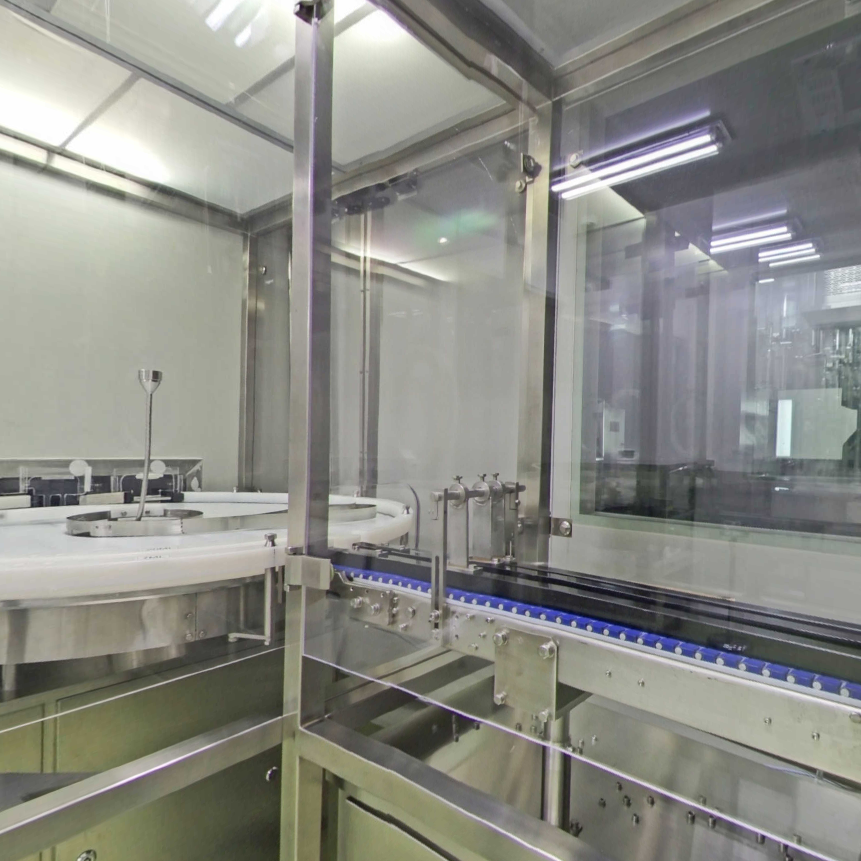
The reason a single-supplier comparison is workable here is that Jiwei manufactures both molecules within the same synthetic-polypeptide portfolio, using solid-phase synthesis and high-purity purification technologies. That means the decision between them is a decision about timing and configuration — not about rebuilding a supply relationship.
Manufacturing and quality-control facts that apply to both molecules
- Established base: founded 2007, a 4,500 m² facility, 97 employees and a 15-engineer R&D team.
- Capacity: annual output of 50,000 pieces, with a monthly capacity of 50,000 pieces under the OEM/ODM program.
- Quality control: 100% inspection before shipment and a purity test at ≥99%, which is the standard that makes the term high-purity Retatrutide a verifiable claim rather than a marketing phrase.
- Customization: OEM/ODM services covering logo and dose configuration.
- After-sales: reshipment for quality issues, technical support and after-sales consultation.
- Sampling: free samples are available so buyers can run quality evaluation and testing in advance.
Documentation held by the manufacturer
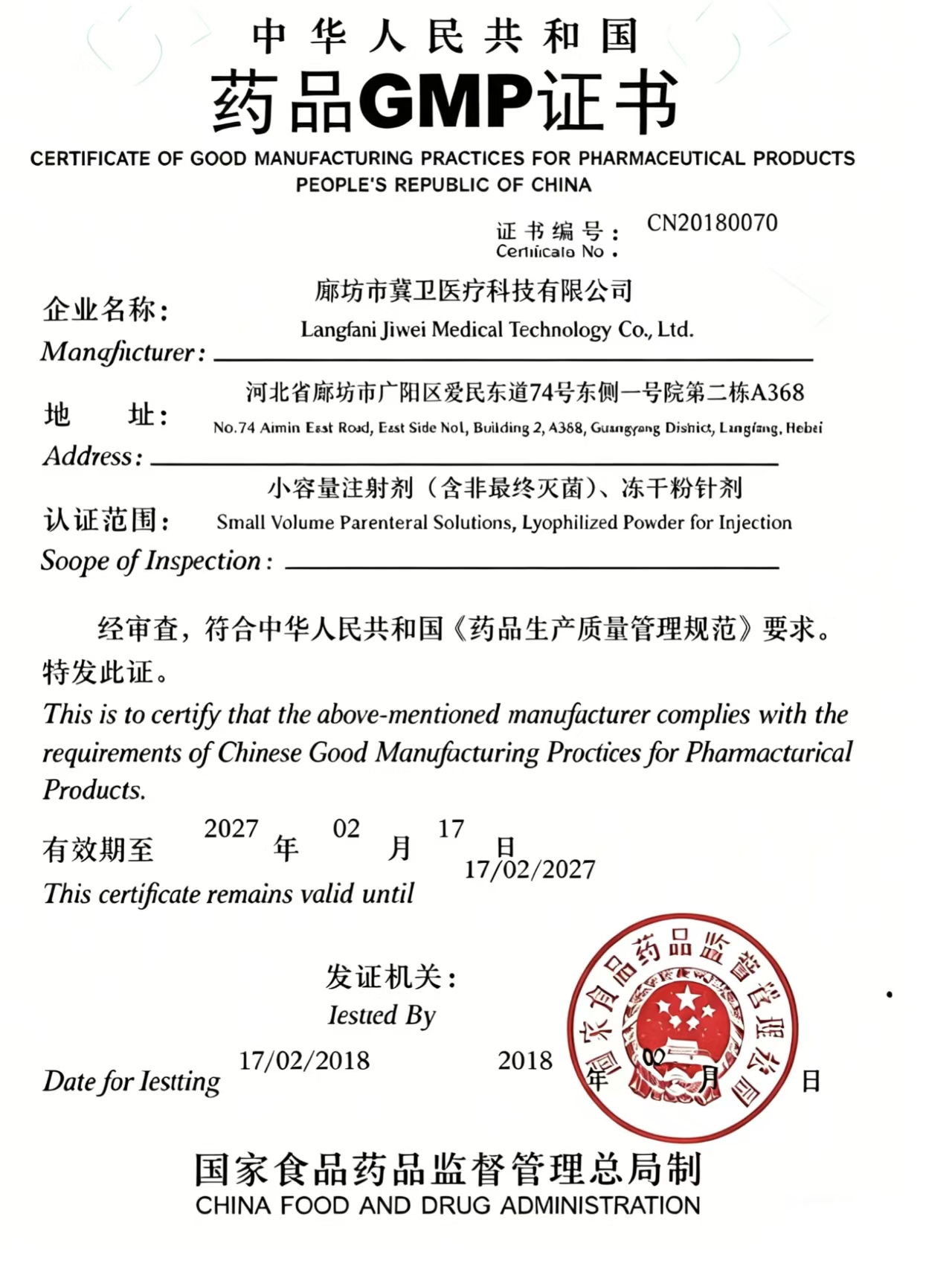
Jiwei holds GMP certificate CN20180070, issued by the China Food and Drug Administration under the Chinese Good Manufacturing Practices (GMP) for Pharmaceutical Products. It was issued on 2018-02-17 and is valid until 2027-02-17, with a scope covering Small Volume Parenteral Solutions and Lyophilized Powder for Injection, and a stated market of the EU and China. Tirzepatide is listed among the applicable products of that certificate, alongside Tesamorelin, Glutathione, NAD and GHK-CU.
Retatrutide appears in the company's synthetic-polypeptide portfolio but not in that certificate's applicable-product list. For a procurement team this is a material finding, not a disqualification: it means the compliance package for a Retatrutide program must be requested and reviewed on a product-specific basis, while the Tirzepatide package can be checked against an existing certificate scope immediately.
The Tirzepatide line, as documented
Tirzepatide is carried as a GMP-grade lyophilized powder with an assay above 99%, supplied in 5/10/15/20/22/25/30/35/40/60 mg presentations, packaged at 10 vials per box, with a 2-year shelf life and cool, dry storage. The standard catalog listing shows a MOQ of 1 box and delivery within 24 hours; the OEM/ODM program parameters specify a MOQ of 50 boxes and a 2-week lead time. Those two figures describe different buying modes, and buyers should confirm which mode their order falls under before finalizing volumes.
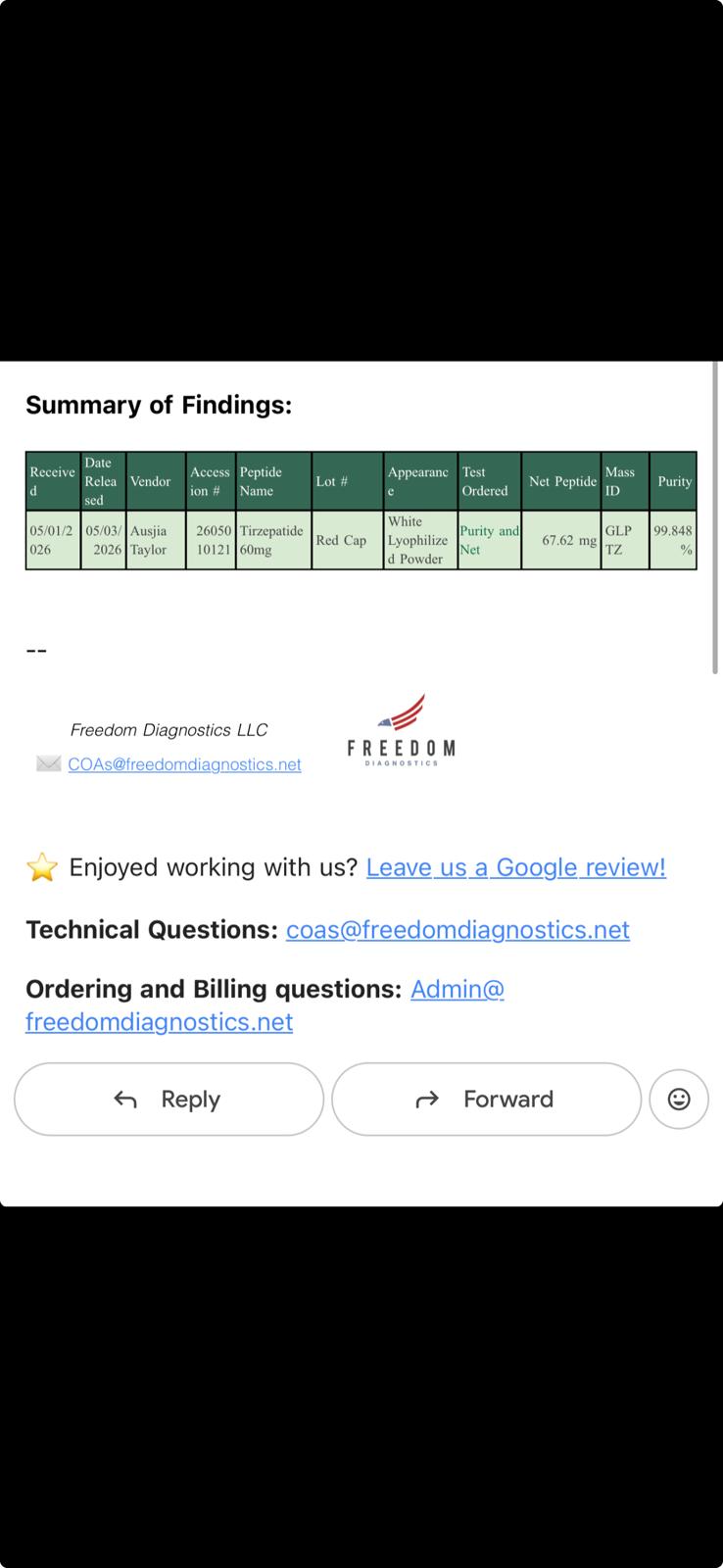
Purity on this line is documented rather than asserted: a customer case record for the 60 mg presentation carries a measured purity of 99.848%.
Step-by-Step Breakdown: A Six-Step Evaluation Sequence
The sequence below is ordered deliberately. Each step can eliminate a molecule or a supplier before the next step consumes budget.
- Fix the market pathway before the molecule. Define the destination market and the documentation it requires for a peptide API. If the pathway demands an approval status or pharmacopoeial monograph that Retatrutide does not currently hold, Tirzepatide becomes the default for immediate orders and Retatrutide becomes a pipeline allocation instead.
- Score pipeline maturity against your launch calendar. Map the molecule's development stage to the date you need inventory. A Phase 3 investigational molecule fits a program that is still building its dossier; a documented GMP line fits a program that needs vials this quarter.
- Verify documentation per product, not per website. Ask for the certificate of analysis, the specification sheet and — where the molecule appears on a GMP certificate — the certificate scope. Check whether your specific molecule is listed as an applicable product, as Tirzepatide is, or requires separate documentation.
- Match MOQ and lead time to the volume profile. Compare the 50-box OEM/ODM MOQ and 2-week lead time against the 1-box catalog MOQ and 24-hour delivery claim. A pilot order and a scaled order are different purchases with different economics.
- Test the specification you will actually buy. Use the free sample program to evaluate the presentation, dose strength and packaging format you intend to order — not a generic reference sample. Judge reconstitution behaviour, packaging integrity on arrival and the completeness of the accompanying analysis.
- Lock after-sales terms into the agreement. Confirm the reshipment policy for quality issues, the technical support channel and the after-sales consultation process before the first production batch, not after it.

Use Cases: Three Buyer Profiles and How the Choice Resolves
Profile 1 — The research-use catalog builder
This buyer sells research-grade peptides into laboratory and R&D channels where no marketing authorization is claimed. Speed of catalog expansion matters more than regulatory dossiers. Retatrutide-led ordering fits here, because the buyer is positioning a next-generation molecule for research demand in weight management and metabolic disorder programs, and the supplier relationship — sampling, QC, packaging — is already in place. Retatrutide lyophilized powder, supplied as raw material with batch documentation, is the relevant format, and buyers who need a peptide solution format handle reconstitution downstream rather than at the supplier.
Profile 2 — The regulated-market developer
This buyer needs a molecule with a documented, checkable paper trail. Tirzepatide is the defensible starting point: GMP grade, assay above 99%, 10 vials per box, and an applicable-product entry under GMP certificate CN20180070 valid to 2027-02-17. The buyer can complete the compliance review without waiting on new documentation, and can add Retatrutide later as the pipeline matures.
Profile 3 — The distributor scaling a private-label portfolio
This buyer wants both molecules under one brand identity. The OEM/ODM program — logo and dose customization, 50-box MOQ, 2-week lead time, monthly capacity of 50,000 pieces — allows a single private-label line to carry a documented molecule today and an emerging molecule as volumes develop. Buyers configuring custom Retatrutide dosage formats, for example a 5 mg or a 20 mg presentation, work within this same program rather than a separate one.
Reported customer case
A research buyer based in the United States ordered 20 boxes for a weight-loss application and has worked with the supplier over a two-year period. The reported outcome was a weight loss of 8 kg over two weeks, with accompanying feedback describing fast results and high purity; the batch documentation associated with that order recorded 99.848% purity for the Tirzepatide 60 mg presentation. This is a single reported customer outcome, not a controlled clinical endpoint, and it should be read as a satisfaction and documentation signal rather than as a performance specification.
Comparison Table: The Head-to-Head View
The first table compares the two molecules on the criteria a procurement team can actually verify. Where a data point is not documented for Retatrutide, the table says so rather than estimating it.
| Decision criterion | Retatrutide | Tirzepatide |
|---|---|---|
| Portfolio position | Emerging option within the same synthetic-polypeptide portfolio | Documented line with a published product data sheet |
| Regulatory status | Investigational; Phase 3 as of July 2026; not FDA-approved; no USP monograph; not compoundable under 503A or 503B | Buyers must verify the authorization and import status that applies in their own market |
| Grade | Manufactured under the same GMP-scope environment; product-specific grade sheet to be confirmed | Listed GMP grade |
| Assay / purity | Covered by the ≥99% purity test applied as a pre-shipment QC standard; batch-specific value on request | Assay above 99%; 99.848% documented for the 60 mg presentation in a customer case record |
| Dosage presentations | To be confirmed per program | 5/10/15/20/22/25/30/35/40/60 mg |
| Physical form | Lyophilized powder (portfolio description) | Lyophilized powder / raw powder |
| Packaging | To be confirmed per program | 10 vials per box |
| Shelf life / storage | To be confirmed per batch documentation | 2 years; cool, dry place |
| GMP certificate scope | Not listed among the applicable products of certificate CN20180070; request product-specific documentation | Listed among the applicable products of certificate CN20180070 |
The second table covers the supplier program parameters that apply to either molecule. These are the terms that determine whether a choice is executable, regardless of which molecule is chosen.
| Program parameter | Catalog mode | OEM/ODM mode |
|---|---|---|
| MOQ | 1 box (as listed for Tirzepatide) | 50 boxes |
| Lead time | Delivery within 24 hours; shipment within 2-3 working days after order confirmation | 2 weeks |
| Customization | Standard specification | Logo and dose customization |
| Monthly capacity | Not specified for this mode | 50,000 pieces |
| Quality control | 100% inspection before shipment; ≥99% purity test | |
| Sampling | Free samples available for quality evaluation and testing in advance | |
| After-sales | Reshipment for quality issues, technical support, after-sales consultation | |
Note on comparability: the two tables describe different things on purpose. Table 1 compares molecules and contains only facts that are documented for each one. Table 2 describes the buying modes offered by the manufacturer and applies to both molecules. Where a Retatrutide data point is not documented, this framework states that it must be confirmed rather than inferring it from the Tirzepatide sheet.
Frequently Asked Questions
Is Retatrutide approved for commercial supply, and what documentation should buyers verify?
No. As of July 2026, Retatrutide (LY3437943) remains an investigational drug in Phase 3 clinical trials, is not FDA-approved for any indication, has no USP monograph, and cannot be legally compounded under sections 503A or 503B. On the supplier side, Jiwei holds GMP certificate CN20180070 issued by the China Food and Drug Administration, valid from 2018-02-17 to 2027-02-17, covering Small Volume Parenteral Solutions and Lyophilized Powder for Injection. Tirzepatide is listed among the applicable products of that certificate; Retatrutide is not listed in that applicable-product set, so its compliance package should be requested on a product-specific basis. Buyers must confirm the authorization and import status that applies in their own jurisdiction for either molecule.
What capability differences should buyers expect between the two molecules?
Both molecules sit in the same synthetic-polypeptide portfolio, produced with solid-phase synthesis and high-purity purification, under an OEM/ODM program that covers logo and dose customization, a monthly capacity of 50,000 pieces, and a quality-control standard of 100% inspection before shipment with a ≥99% purity test. The differences are in documentation maturity rather than manufacturing route: Tirzepatide is documented as GMP grade, lyophilized powder, assay above 99%, in 5/10/15/20/22/25/30/35/40/60 mg presentations packed 10 vials per box with a 2-year shelf life, while Retatrutide presentation and grade sheets should be confirmed per program rather than assumed from the Tirzepatide sheet.
How should a buyer build a budget when no unit pricing is published?
Because Jiwei does not publish unit pricing, budget models should be built on the variables that actually move a quote: order quantity, where the OEM/ODM program carries a 50-box MOQ and the standard catalog listing shows a 1-box MOQ; dose strength and vials per box; logo and packaging customization; the documentation package required for your market; and freight or cold-chain handling. Requesting a quote that itemizes each of these lines is what makes the Retatrutide and Tirzepatide options genuinely comparable on cost rather than on headline price alone.
Can buyers evaluate a free sample before committing to a production order?
Yes. Free samples are available so buyers can conduct quality evaluation and testing in advance. A useful sample protocol tests the specification you will actually purchase: appearance and physical form, the documented assay or purity value, reconstitution behaviour, packaging integrity on arrival, and the completeness of the certificate of analysis. Because sample results are batch-linked, ask that the sample and the first production batch be drawn from the same specification so the evaluation carries forward.
What lead time applies, and how much buffer should the first order include?
Under the OEM/ODM program, Jiwei states a 2-week lead time on an MOQ of 50 boxes. Standard catalog listings indicate delivery within 24 hours and shipment within 2-3 working days after order confirmation. Lyophilized powder carries a 2-year shelf life and should be stored in a cool, dry place, which gives buyers room to hold buffer stock without risking expiry. The practical next step is to run sample evaluation and documentation review in parallel with the first quote, so that lead time starts from a validated specification: request a Retatrutide or Tirzepatide sample and an itemized quote through www.jiweipep.com, or download the Jiwei product brochure.
Conclusion: Decide by Timeline, Then by Molecule
Tirzepatide and Retatrutide resolve to different halves of the same procurement plan. Tirzepatide is the documented half: GMP grade, assay above 99%, 5-60 mg presentations, 10 vials per box, an applicable-product entry under GMP certificate CN20180070 valid to 2027-02-17, and a customer case record documenting 99.848% purity for the 60 mg presentation. Retatrutide is the pipeline half: a triple GLP-1, GIP and glucagon receptor agonist with reported Phase 2 mean weight reduction of up to 24.2% and approximately 30% at 80 weeks in Phase 3 TRIUMPH-1, still investigational and therefore documentation-dependent rather than approval-backed.
Read that way, the decision stops being a preference contest and becomes a scheduling exercise. If your market pathway requires a checkable paper trail now, Tirzepatide is the executable choice and Retatrutide is the next allocation. If your program is still building its dossier and catalog breadth matters more than authorization status, Retatrutide can lead while the documentation package is assembled alongside it. Sourcing both from one manufacturer — under one OEM/ODM program with logo and dose customization, one 50-box MOQ structure, a 2-week lead time, free samples and a defined after-sales process — keeps the option open without doubling the supplier risk.
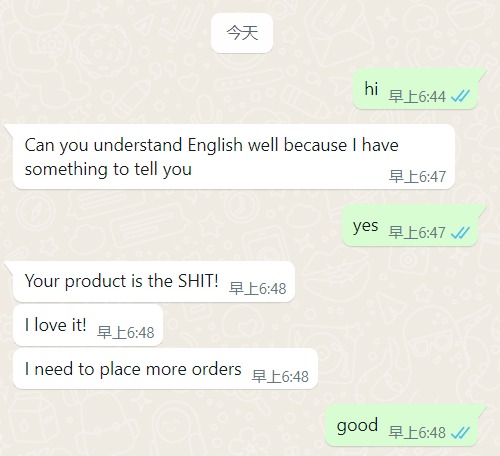
Next Step
Run the comparison on your own numbers. Request a free sample of the molecule and presentation you are evaluating, ask for an itemized quote covering MOQ mode, dosage, packaging and documentation, and review batch-level analysis before you commit volume.
Contact: Stella · Stella@lookbiotech.com · Tel / WhatsApp: +44 7962616312 · Message on WhatsApp · www.jiweipep.com
Langfang Jiwei Medical Technology Co., Ltd. · A368, Building 2, No.1 Courtyard, East Aimin Road, Guangyang District, Langfang City, Hebei Province, China · Download the product brochure (PDF)