
Retatrutide in 2026: What It Is, Why It’s Gaining Attention, and What Buyers Should Know
Date: 2026-09-06 Categories: Latest News Hits: 816

GMP peptide manufacturing freeze room at Langfang Jiwei Medical Technology Co., Ltd.
Retatrutide in 2026: What It Is, Why It’s Gaining Attention, and What Buyers Should Know
Retatrutide is no longer just a laboratory name in obesity research. This investigational peptide, also referred to as LY3437943, is classified as a triple agonist of the GLP-1, GIP, and glucagon receptors. According to reported trial data, retatrutide produced mean weight reductions of up to 24.2% in Phase 2 studies, while Phase 3 TRIUMPH-1 results have shown approximately 30% average weight reduction at 80 weeks. For buyers who supply research programs, clinical development teams, or advanced wellness applications, understanding what retatrutide is — and how it is manufactured and sourced — is becoming a practical procurement question, not just a scientific one.
The Problem Behind the Interest: Metabolic Disease and Obesity Are Now Core Market Drivers
Global health systems are facing a sustained increase in obesity and metabolic disorders. These conditions are associated with type 2 diabetes risk, cardiovascular complications, and reduced quality of life. As a result, molecules that can potentially support weight management, glucose control, and broader metabolic regulation are receiving intense attention from researchers and commercial buyers alike.
Market data from Grand View Research states that the global anti-obesity medication market was valued at USD 6.6 billion in 2023 and is projected to reach USD 77.2 billion by 2030, representing a compound annual growth rate of 31.7%. Another report from the same research firm indicates that peptide therapeutics for metabolic disorders accounted for 63.6% of total industry revenue share in 2025. These numbers suggest that peptide-based approaches are no longer a niche segment of biomedical research; they are central to the future direction of metabolic health.
What Is Retatrutide? A Clear Definition
Retatrutide (LY3437943) is an investigational synthetic peptide that simultaneously targets three receptors involved in energy balance and glucose metabolism: GLP-1, GIP, and glucagon. Because it activates three pathways rather than one, it is commonly described as a triple agonist. This broader mechanism is one reason why retatrutide has generated unusually high interest in clinical development programs focused on obesity, type 2 diabetes, and metabolic dysfunction.
For procurement and R&D buyers, retatrutide currently fits into the "research-stage molecule" category. It is not an approved pharmaceutical product. Buyers who are evaluating retatrutide for research or investigational programs should therefore be especially careful about supplier qualifications, documentation, purity standards, and regulatory boundaries.
How Does the Triple-Agonist Mechanism Matter?
The available verified data confirms that retatrutide acts on GLP-1, GIP, and glucagon receptors. GLP-1 and GIP are incretin hormones that help regulate insulin secretion and appetite signaling, while glucagon receptor activation is associated with energy expenditure. By engaging all three receptors, retatrutide is being studied for its potential to produce stronger metabolic effects than single-receptor or dual-receptor approaches. The exact clinical benefits and long-term outcomes remain under investigation, but the mechanistic rationale is well documented in the reported trial summaries.
Potential Applications: What Is Retatrutide Being Studied For?
Based on published trial information, the most prominent areas of investigation for retatrutide are:
- Weight loss and weight management: Phase 2 and Phase 3 trial results have reported substantial reductions in body weight compared with baseline.
- Obesity treatment: The molecule is being evaluated in people living with obesity or overweight, with or without related metabolic conditions.
- Glucose control and type 2 diabetes: The GLP-1 and GIP mechanisms are relevant to glucose-dependent insulin signaling, making retatrutide a candidate for metabolic disorder research.
- Metabolic health research: Broader investigational interest includes energy expenditure, appetite regulation, and body composition changes.
While retatrutide is not FDA-approved as of July 2026, it remains one of the most closely watched investigational agents in the incretin-based drug landscape. According to a 2026 competitive market review, Eli Lilly and Novo Nordisk are the leading players in the incretin market, with Lilly estimated to control over 60% of the U.S. market. That competitive environment helps explain why retatrutide has become such an important reference molecule in metabolic research.
Key Clinical and Regulatory Facts at a Glance
| Item | Reported Fact | Status / Context |
|---|---|---|
| Receptor target | GLP-1, GIP, glucagon triple agonist | Verified third-party description |
| Phase 2 weight reduction | Up to 24.2% mean weight loss | Published in 2026 reporting on Phase 2 trials |
| Phase 3 TRIUMPH-1 | Approximately 30% mean weight reduction at 80 weeks | Reported by Eli Lilly / The Pharmaceutical Journal |
| FDA approval status | Not FDA approved for any indication | Investigational drug as of July 2026 |
| Market projection | Global anti-obesity drug market projected to reach USD 77.2B by 2030 | Grand View Research estimate, 2023 base |
Regulatory Boundaries: What Buyers Must Understand
As of July 2026, retatrutide is an investigational drug in Phase 3 clinical trials and is not FDA-approved for any indication. It has no USP monograph and cannot be legally compounded under sections 503A or 503B of U.S. law. This information comes from FDA communications regarding unapproved GLP-1 drugs used for weight loss.
The practical implication is important: buyers should not confuse raw peptide supply for research with finished pharmaceutical manufacturing. Research-use peptides, analytical standards, and custom synthesis materials all have different compliance requirements from commercial drug products. A responsible supply partner should be transparent about the regulatory status of the material and its intended use.
Manufacturing and Sourcing: Why High Purity and GMP Matter for Retatrutide
Complex peptides like retatrutide require high-purity API synthesis. According to industry sources, purification — particularly HPLC purification and lyophilization — has become the primary technical bottleneck in producing complex peptide molecules. This is not simply a quality-control detail; it is the core technical challenge that separates reliable research-grade supply from inconsistent material.
Buyers evaluating retatrutide suppliers should consider several operational dimensions:
- GMP-based manufacturing environment: Peptide production in a GMP-grade facility supports consistency in quality systems, documentation, and reproducibility.
- Purification capability: High-purity synthesis requires advanced purification equipment and verified analytical methods.
- Lyophilization capacity: Freeze-dried peptide formats are common for research-stage molecules and require controlled cold-chain processing.
- R&D support: A strong R&D team can help buyers navigate custom peptide requirements and technical documentation.
- Batch consistency: For longitudinal research, multiple batches should be produced under the same validated process.
Supplier Example: Langfang Jiwei Medical Technology Co., Ltd.
Langfang Jiwei Medical Technology Co., Ltd. is a polypeptide manufacturer established in 2007. The company operates a 4,500-square-meter manufacturing facility with approximately 97 employees, including 15 R&D engineers, and reports an annual production capacity of 50,000 pieces. According to the company’s public product information, Jiwei’s main products include retatrutide, tirzepatide, semaglutide, tesamorelin, GHK-CU, and NAD.
Jiwei states that its synthetic polypeptide series uses advanced solid-phase synthesis and high-purity purification technologies. The company positions itself around the R&D, production, sales, and technical support of polypeptide products, and serves markets including North America, Europe, New Zealand, Singapore, India, Malaysia, and Russia.
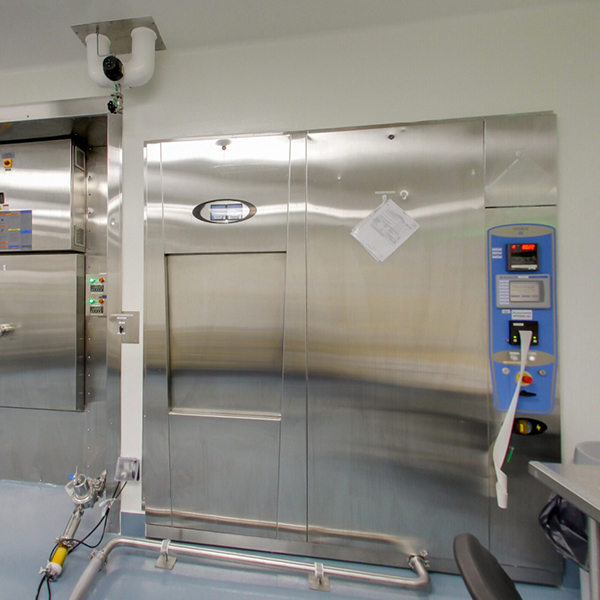
Control room inside the Jiwei Medical GMP peptide manufacturing facility.
For buyers looking at long-term peptide procurement, Jiwei’s profile is typical of a specialized Chinese GMP-oriented manufacturer: it emphasizes in-house synthesis, purification, quality inspection, overseas distribution, and support for customized requirements. Buyers should still request batch-specific documentation and technical qualification packages before committing to a supply relationship.
Frequently Asked Questions About Retatrutide
Q1: Is retatrutide approved by the FDA?
No. As of July 2026, retatrutide remains an investigational drug in Phase 3 clinical trials. It is not FDA-approved for any indication, has no USP monograph, and cannot be legally compounded under U.S. sections 503A or 503B. Buyers should treat retatrutide as a research-stage molecule and verify the intended-use restrictions in their own country.
Q2: What is retatrutide used for in research?
Retatrutide is being studied for weight loss, obesity, type 2 diabetes, and broader metabolic disorders. Because it acts as a triple agonist of GLP-1, GIP, and glucagon receptors, it may influence both glucose control and energy balance. Reported trial data show mean weight reduction of up to 24.2% in Phase 2 and approximately 30% in Phase 3 TRIUMPH-1 at 80 weeks.
Q3: What supply format is suitable for retatrutide research?
Research-stage peptides like retatrutide are commonly supplied in lyophilized powder form to improve stability during transport and storage. The production process usually requires high-purity synthesis followed by HPLC purification and lyophilization. Buyers should confirm the purity grade, residual solvent data, storage conditions, and COA with the supplier before ordering.
Q4: What should a buyer look for in a retatrutide manufacturer?
Buyers should evaluate the manufacturer’s GMP-based production environment, purification capability, R&D support, documentation quality, and batch consistency. For complex peptides, purification is often the primary technical bottleneck. A reliable supplier should be able to explain its synthesis route, quality control process, and packaging options.
Q5: Does Jiwei supply retatrutide to international buyers?
Langfang Jiwei Medical Technology Co., Ltd. includes retatrutide in its main product portfolio, together with tirzepatide, semaglutide, tesamorelin, GHK-CU, and NAD. The company exports to North America, Europe, New Zealand, Singapore, India, Malaysia, Russia, and other regions. International buyers can contact Jiwei directly for product documentation, purchasing options, and sample requests.
Final Thoughts
Retatrutide stands out because it combines multiple metabolic mechanisms in a single peptide molecule. Its reported clinical results are substantial, but its regulatory status remains investigational. For buyers, the most useful perspective is also the most cautious one: treat retatrutide as a high-value research molecule, evaluate the supplier on purity and process capability, and ensure that every order is matched to the correct intended-use framework.
Buyers interested in GMP-oriented peptide supply can download the Jiwei company brochure for more detail on manufacturing capabilities and product scope.
Download Jiwei Company Brochure
For direct inquiries, contact Stella at stella@lookbiotech.com or +44 7962616312. Address: A368, Building 2, No.1 Courtyard East Aimin Road, Guangyang District, Langfang City, Hebei Province, China.