Retatrutide Supply Chain Strategy: Building a Long-Term Partnership That Scales With Your Program
Date: 2026-09-01 Categories: Latest News Hits: 108
Retatrutide Supply Chain Strategy: Building a Long-Term Partnership That Scales With Your Program
A practical guide for research buyers, formulation partners, and distributors who need a dependable Retatrutide supply partner — not just a one-off purchase.
Retatrutide is among the most closely watched investigational peptides in metabolic medicine. For procurement teams, however, the scientific excitement creates a practical challenge: how do you secure a stable, compliant, and scalable supply of high-purity Retatrutide when the supplier base is still maturing and regulatory guardrails are tightening? This guide explains what a long-term Retatrutide supply relationship should include, how to evaluate a GMP peptide manufacturer beyond price, and what to verify before scaling procurement.
Why Long-Term Retatrutide Sourcing Is Different From One-Off Buying
Single order procurement is built around a purchase order. Long-term sourcing is built around a partnership. For a peptide like Retatrutide, the difference affects batch consistency, documentation, compliance readiness, and the ability to scale without re-qualifying a new supplier every quarter.
From a buyer's perspective, there are three practical reasons to shift toward a longer-term supply strategy:
- Batch-to-batch consistency matters. Research programs, stability testing, formulation development, and downstream distribution all rely on reproducible material. A new supplier may provide a great first batch; a long-term partner must repeat that quality across many batches.
- Documentation improves with continuity. COAs, batch records, shipping documentation, and compliance paperwork become easier to manage when one accountable manufacturer supports your program over time.
- Scaling becomes faster. When a partner already knows your specifications, packaging requirements, and quality expectations, moving from a pilot quantity to a larger volume is far simpler.
The anti-obesity medication market is projected to grow substantially in the coming years, with global estimates reaching tens of billions of dollars by 2030. Retatrutide is currently an investigational drug in Phase 3 trials, not an FDA-approved medicine. That means commercial procurement strategies must be built for research-grade supply, custom formulation projects, and future flexibility rather than final drug distribution.
Core Criteria for Selecting a Retatrutide Manufacturing Partner
A long-term Retatrutide supplier should be evaluated on four pillars: manufacturing capability, purity and quality systems, customization flexibility, and supply reliability.
1. GMP Manufacturing Infrastructure
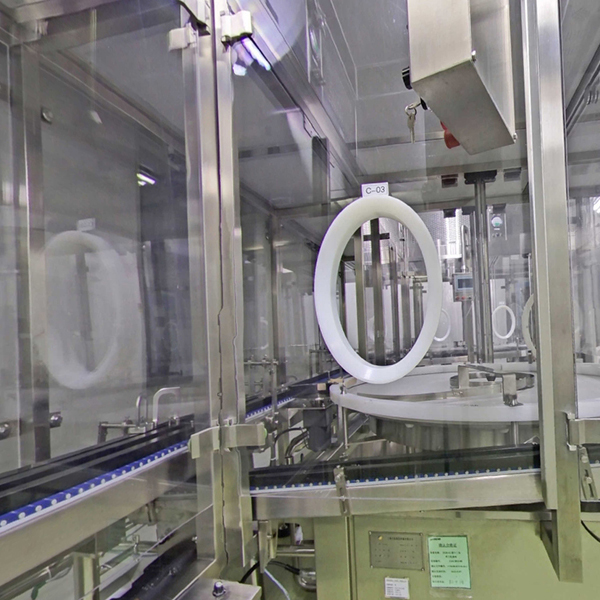
Retatrutide is a complex peptide requiring advanced solid-phase synthesis, high-performance liquid chromatography (HPLC) purification, and lyophilization. Manufacturing complex peptides like Retatrutide requires high-purity API synthesis, with purification and lyophilization as the primary technical bottleneck. Buyers should look for a manufacturer that operates a GMP-grade workshop and can provide relevant quality documentation.
For example, Langfang Jiwei Medical Technology Co., Ltd. (Jiwei) is a polypeptide manufacturer located in Langfang City, Hebei Province, close to Beijing. Jiwei has a 4,500 m² facility, a 15-engineer R&D team, and a product range that includes Retatrutide, Tirzepatide, Semaglutide, Tesamorelin, GHK-CU, and NAD. The company focuses on R&D, production, sales, and technical support of polypeptide products and supplies pharmaceutical raw materials, fine chemicals, synthetic peptides, and related health products.
2. Purity and Batch Consistency
High purity is not just a quality label; it is a functional requirement. Jiwei reports Retatrutide purity ≥99% with batch-to-batch variation ≤0.2% for its GMP in-house synthesis. For buyers running comparative studies, stability programs, or formulation work, this level of consistency reduces variables that are not related to the molecule itself.
When evaluating suppliers, remember:
- Ask for the actual purity specification, not just the phrase "high purity."
- Ask how batch-to-batch variation is measured and documented.
- Ask whether the COA reports impurity profile, not only main peak purity.
3. Customization and OEM/ODM Support
Long-term partners are often asked to support custom packaging, custom dosage presentations, and formula adjustments. Jiwei supports personalized services such as raw material customization, formula adjustment, and packaging optimization according to client requirements. For a distributor or brand owner, this can mean private-label packaging, finished vials with custom labels, or bulk peptide raw material with agreed specifications.
A GMP factory with OEM/ODM experience can typically handle:
- Custom vial sizes and label design
- Custom pack configurations (e.g., 10 vials per box)
- Different peptide presentations: lyophilized powder or peptide solution
- Documentation aligned with destination market requirements
4. Supply Reliability and Lead Time
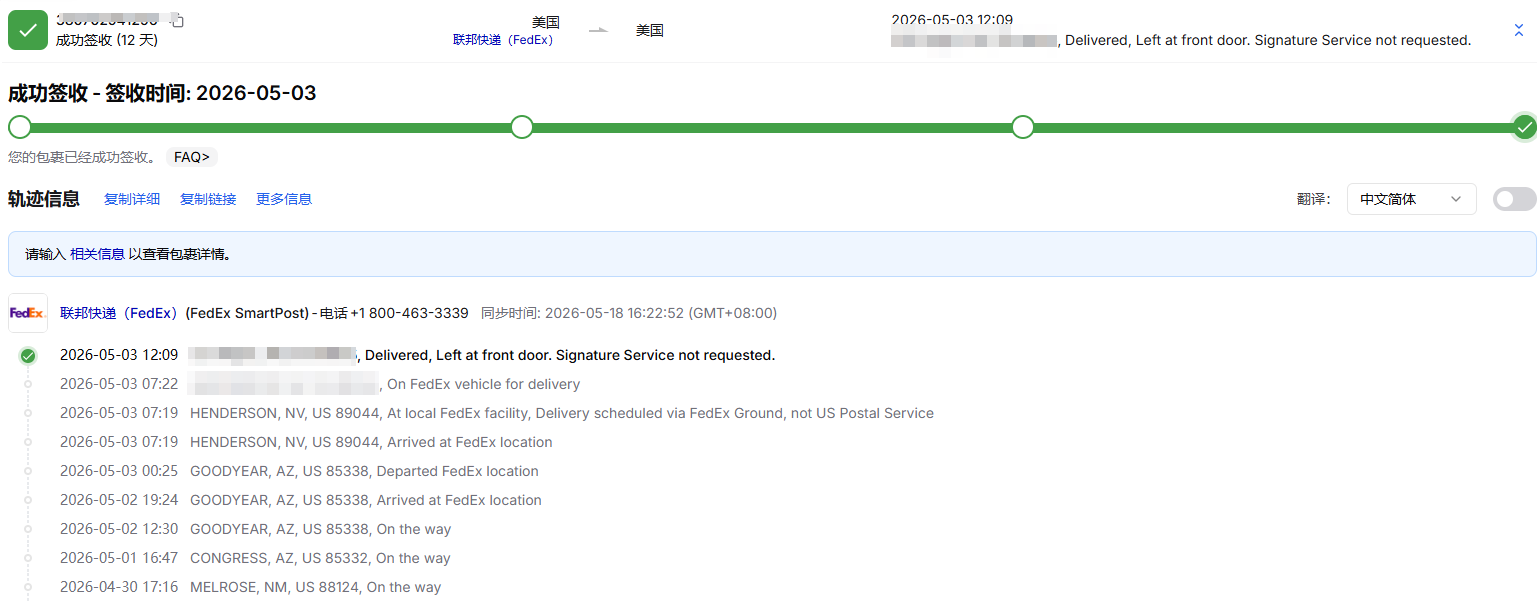
For procurement teams, a brilliant product is useless if it cannot be delivered consistently. Jiwei's published capabilities include a minimum order quantity of 50 boxes, a typical production lead time of 2 weeks, and a monthly production capacity of 50,000 pieces. The company also offers 24-hour dispatch for standard orders, and delivers via DDP door-to-door service with pre-shipment photos and tracking numbers.
These operational details matter because Retatrutide research programs and distribution channels cannot afford long, unpredictable supply gaps.

Retatrutide Sourcing Models: In-House GMP Manufacturing vs. Third-Party Sourcing
One of the most important strategic decisions a buyer can make is choosing between a manufacturer that synthesizes in-house under GMP and a supplier that simply resells peptide material from third-party sources.
The comparison below outlines how the two models differ across the criteria that matter most for long-term procurement.
| Criteria | GMP In-House Manufacturer (e.g., Jiwei) | Third-Party Sourcing / Trading Model |
|---|---|---|
| Synthesis control | Full control of solid-phase synthesis and purification process | Limited visibility into the actual production site and conditions |
| Batch consistency | Achievable with validated in-house processes and quality systems | Can vary depending on which upstream supplier is used |
| Purity evidence | Direct COA from the production facility | COA must be traced back to the original manufacturer; additional documentation may be needed |
| Customization | Direct coordination with production for packaging, labeling, and specifications | Customization typically limited or requires extra lead time |
| Compliance documentation | Manufacturer can provide complete export documentation and batch records | Documentation chain is longer and may be incomplete |
| Cost efficiency over time | No brand premium; better cost-performance for long-term cooperation | May include intermediary margins without adding production value |
For long-term foreign trade partners, research users requiring high purity, or buyers who need compliance documents for EU/US/SEA customs clearance, the GMP in-house model offers a stronger evidence chain. For small-batch trial orders, the same model still works because the manufacturer can supply without brand premium and with low cost for custom packaging.
Regulatory Boundaries Every Buyer Must Understand
As of July 2026, Retatrutide is an investigational drug in Phase 3 clinical trials and is not FDA-approved for any indication. It has no USP monograph and cannot be legally compounded under sections 503A or 503B in the United States. This is a critical compliance fact for any buyer planning to import, distribute, or use Retatrutide.
This does not mean Retatrutide has no legitimate procurement pathway. It means buyers must be precise about the intended use. Common legitimate use cases include:
- Research and development programs in licensed laboratories
- Formulation development for future clinical studies
- Custom peptide projects under appropriate regulatory oversight
- Distributor qualification and sample evaluation programs
A reliable supplier should not obscure this reality. Instead, the supplier should provide accurate labeling, honest documentation, and professional guidance so that the buyer knows exactly what they are purchasing and for which use context it is suitable.
Step-by-Step: How to Build a Long-Term Retatrutide Supply Partnership
Step 1 — Define Your Program Requirements
Before approaching any manufacturer, document your needs: product presentation (lyophilized powder vs. peptide solution), purity threshold, packaging format, target dosing (for example, Retatrutide 5mg or 20mg presentations), annual volume, and destination country. This prevents vague conversations and allows the supplier to evaluate feasibility immediately.
Step 2 — Request a Quality Dossier
Ask the manufacturer for their product specification, COA format, quality control processes, and facility overview. Jiwei, for example, has a complete quality control system covering raw material screening, production processing, and finished product testing. A manufacturer that can describe all three stages is already ahead of one that only offers a price list.
Step 3 — Start With a Trial Order or Sample
Most serious manufacturers offer free samples for quality evaluation. Buyers should test the material under their own conditions and check whether the received product matches the stated specification. Jiwei also supports free samples for customers to conduct quality evaluation and testing in advance.
Step 4 — Validate Production and Documentation Processes
For a small trial order, assess not just the product, but the process: How quickly did the supplier respond? Were the documents clear? Was the packaging appropriate? Did you receive pre-shipment photos and a tracking number? This is the evidence that the supplier will handle a larger order professionally.
Step 5 — Negotiate Volume, Lead Time, and Customization
Once quality is confirmed, move into operational discussions. A minimum order quantity of 50 boxes is reasonable for buyers who are already running structured programs. With a typical production lead time of 2 weeks and monthly capacity at 50,000 pieces, Jiwei can provide a clear planning horizon for partners who need predictability.
Step 6 — Establish an Ongoing Quality Review Rhythm
Long-term sourcing should include periodic quality reviews: new COAs for every batch, stability checkpoints, and regular communication with technical support. Jiwei's after-sales response within 24 hours and one-stop service—covering product consultation, technical parameter support, usage guidance, and long-term after-sales tracking—are designed for this type of continuous collaboration.
Use Cases: When a Long-Term Supplier Relationship Is Worth Building
Research institutions running longitudinal metabolic studies
These buyers need a consistent supply of high-purity Retatrutide across multiple batches. A GMP manufacturer with batch-to-batch variation ≤0.2% helps researchers avoid batch effects that could confound data interpretation.
Distributors entering the metabolic peptide category
Distributors benefit from a manufacturer that offers custom packaging, competitive factory-direct pricing, and compliance documents for EU/US/SEA customs clearance. One qualified supplier can serve as the backbone of a new product line.
Formulation labs developing custom presentations
OEM/ODM support is critical for labs or brands that want a specific dosage presentation or packaging configuration. Jiwei supports raw material customization, formula adjustment, and packaging optimization, which shortens the timeline from concept to supply.
Small-batch trial programs that plan to scale
Buyers who begin with small trial orders need a supplier that does not change behavior when volumes grow. Jiwei's minimum order quantity of 50 boxes allows entry at a manageable level, while monthly capacity of 50,000 pieces ensures room to scale.
Risk Management in Retatrutide Handling and Storage
Even with a reliable supplier, the buyer has operational responsibility after receipt. The most common risk is loss of potency. The standard control method is simple: after mixing lyophilized Retatrutide with bacteriostatic water (BAC water), refrigerate the unused solution and do not use it after 72 hours. This is a well-known handling rule for reconstituted peptides.
At the manufacturing level, suppliers should support stability through strict cold-chain logistics, batch purity testing, and stability validation studies. Buyers should confirm that their supplier can ship under conditions that protect the product throughout transit.
| Risk | Buyer Control Measure | Supplier-Side Measure |
|---|---|---|
| Loss of potency during storage | Refrigerate unused solution after reconstitution; do not use after 72 hours | Strict cold-chain logistics, batch purity testing, stability validation studies |
| Inconsistent batch quality | Require COA for every batch; inspect pre-shipment photos | GMP workshop synthesis; purity ≥99%; batch-to-batch variation ≤0.2% |
| Customs or documentation delays | Request export documentation and compliance paperwork in advance | Complete export qualifications; DDP door-to-door delivery; pre-shipment photos with tracking number |
Frequently Asked Questions
Retatrutide is an investigational drug and is not FDA-approved for any indication as of 2026. It has no USP monograph and cannot be legally compounded under USA sections 503A or 503B. Buyers should confirm the intended use (for example, research or formulation development), request complete COAs and export documentation, and ensure the supplier communicates regulatory boundaries clearly.
A reliable partner should have GMP-managed peptide production, advanced solid-phase synthesis, HPLC purification, lyophilization capability, and a documented quality system covering raw material screening, production processing, and finished product testing. Jiwei, for example, operates GMP in-house synthesis and reports Retatrutide purity ≥99% with batch-to-batch variation ≤0.2%.
Jiwei's published terms are a minimum order quantity of 50 boxes, a typical production lead time of 2 weeks, and a monthly production capacity of 50,000 pieces. Payment options include Bank Transfer, Revolut, and Wise. Delivery is available via DDP door-to-door with pre-shipment photos and tracking numbers.
Yes. Jiwei offers free samples so that buyers can evaluate quality before purchase. Small-batch trial orders are also supported under the same GMP-controlled process, allowing buyers to verify purity, documentation, packaging, and communication speed before scaling to a larger partnership.
For standard orders, Jiwei offers dispatch within 24 hours. For production orders, the typical lead time is 2 weeks. The company also reports delivery to the USA within 12 days using its logistics network. To confirm an exact timeline for your region and order configuration, contact the Jiwei team directly with your volume and destination.
Ready to evaluate Retatrutide quality for your own program?
Contact Jiwei to request a sample, discuss a trial order, or get a quote for your target volume and customization needs.
Email: stella@lookbiotech.com | WhatsApp: +44 7962 616312
Want the full company profile and product capability overview?
This article is intended for professional procurement and research audiences. It does not constitute medical advice or a recommendation to use Retatrutide for any unapproved purpose. Buyers should ensure compliance with applicable laws in their jurisdiction.